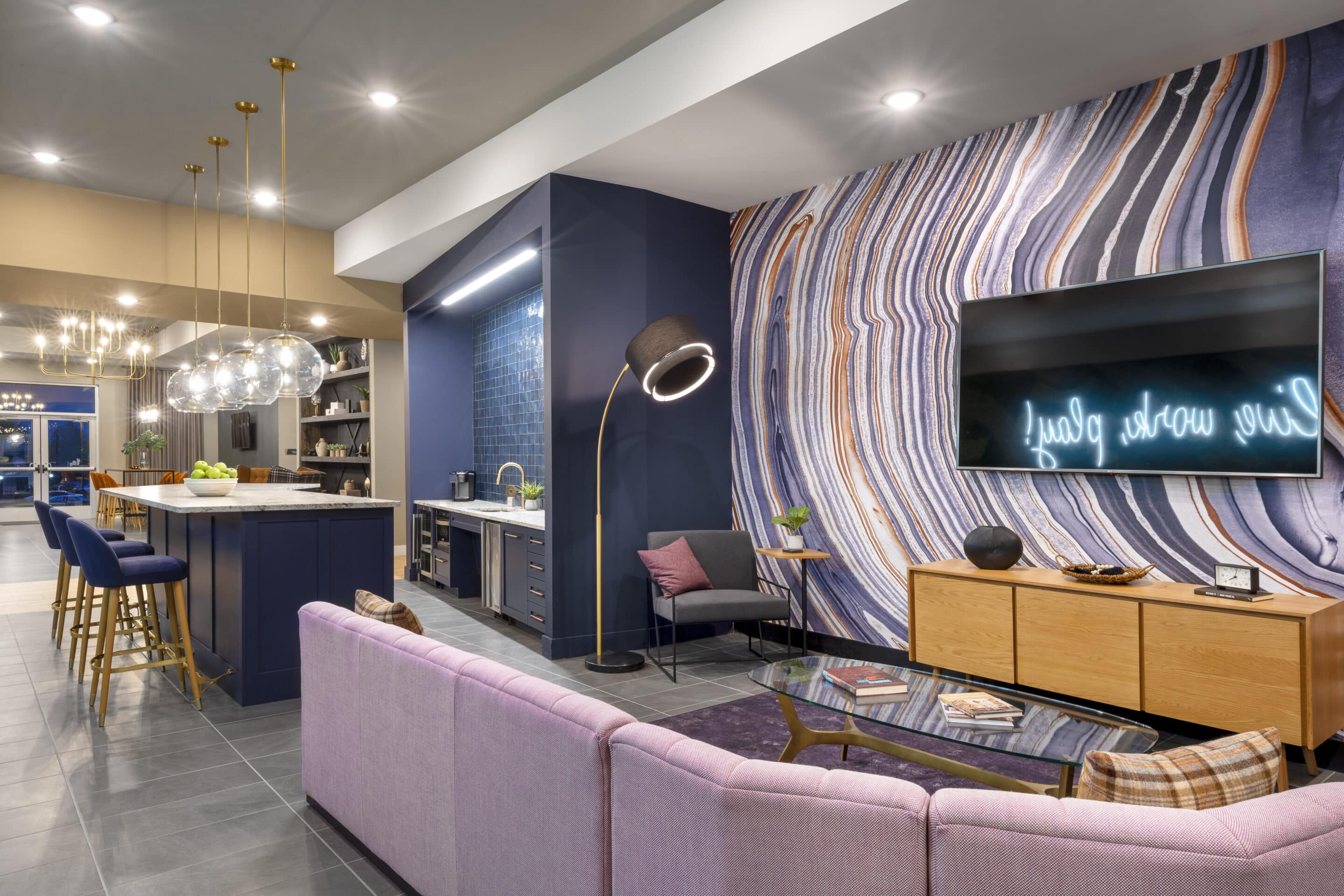
Styling a Bookcase: A Designer’s Approach
A thoughtfully styled bookcase does more than store books—it enhances the architecture of a space and reflects the people who live or work there. Whether incorporated into a corporate or multifamily application, a well-composed bookcase adds depth, balance, and visual interest. Below is our approach to creating a polished, intentional display.

Begin with Books as the Foundation
Books provide structure and rhythm, making them the starting point for any bookcase design. We recommend using hardback books for their durability and visual presence.
Budget-conscious sourcing doesn’t mean sacrificing style. Goodwill is an excellent resource for hardback books, especially when selecting titles with neutral spines, classic typography, or subtle color variation. Arrange books both vertically and horizontally to create movement and to establish surfaces for layered styling.
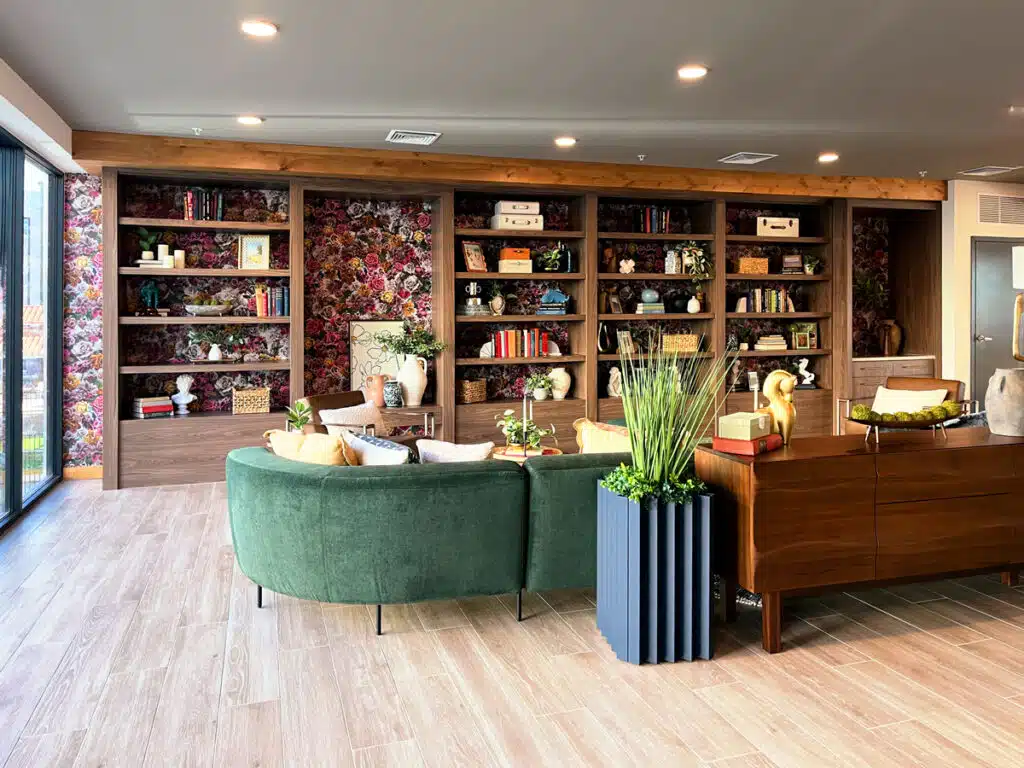
Layer in Decorative Elements
Once the foundation is set, introduce curated accessories to add personality and dimension.
Consider incorporating:
- Globes or vintage-style radios to introduce character and narrative
- Clocks for a functional yet sculptural element
- Bowls and small baskets to add texture and warmth
- Animal figures as subtle points of interest
- Vases for form and balance, with or without florals
- Picture frames for personal or contextual storytelling
- Bookends to ground stacked books
- Artificial plants to bring in greenery and soften hard lines

Focus on Balance and Proportion
Successful bookcase styling relies on balance. Vary object heights and scales, and avoid symmetrical repetition across shelves. Allow for moments of negative space so the eye can rest—this restraint helps the bookcase feel integrated into the architecture rather than overly decorative.
Maintain a Cohesive Palette
Limit your color palette and material selections to ensure the bookcase complements the surrounding interior. Repeating finishes—such as wood tones, metals, or ceramics—creates continuity and reinforces the overall design language of the space.

Edit with Intention
The final step is editing. Step back, assess the composition, and remove anything that feels redundant or visually distracting. A refined bookcase should feel curated and effortless, supporting the architecture rather than competing with it.
When styled with intention, a bookcase becomes an extension of the space itself—functional, personal, and visually compelling. With thoughtful sourcing and careful composition, it can elevate the overall interior and reinforce a cohesive design vision.